
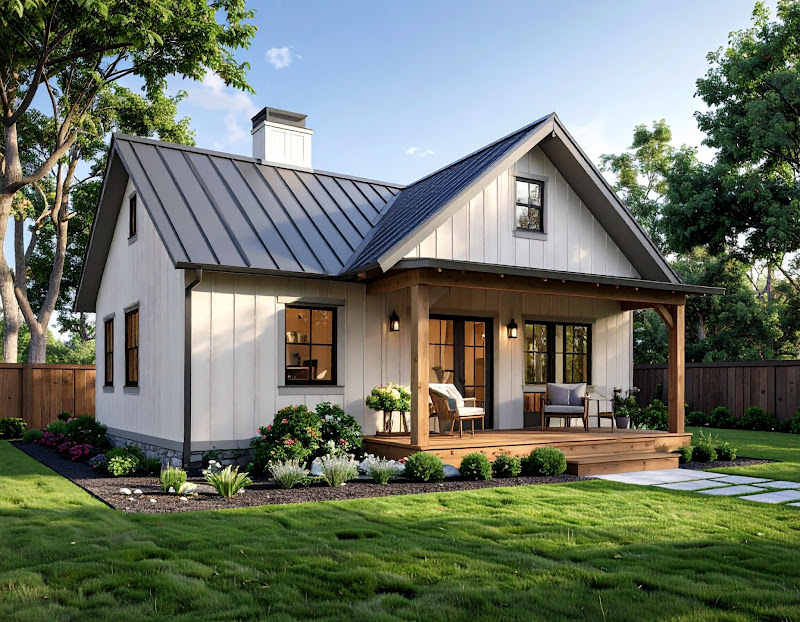
In 2017, the City of Atlanta made it legal to construct an ADU on your property if you live in Atlanta and your property is zoned as R-4, R-4A or R-5. If you’re a homeowner and you’re considering building an ADU, your zoning is one of the first things you’ll want to know. But what do these designations mean? And how can you tell which one you are?
How does the city of Atlanta define an ADU?
Across the country, people use ADU (an acronym for ‘accessory dwelling unit’) as a kind of blanket term for a smaller house or apartment – any kind of separate living space – that’s built on another property. You might see them called carriage houses, or garage apartments, or granny flats, or in-law suites. An ADU can be any of these things. But if you live in Atlanta it’s important to understand that in order to be legal, an ADU has to comply with a few requirements. It has to have a total floor area of 750 square feet or less, be less than 20 feet high (two stories, basically) and be detached from your main residence.
How does an ADU differ from a guest house?
Even in zoning districts where you can’t build an ADU, you can still build what’s called a guest house. (We’ll go into this more later.) The big difference between an ADU and a guest house is that ADUs are legal for long term occupation, meaning you can rent them out for a period of more than 30 days.
What’s the difference between R-1 – R-5?
R-1, R-2, R-2A, R-3 and so forth are residential zoning designations within the city of Atlanta. Generally speaking, as the numbers get higher they refer to smaller lots in denser neighborhoods. For example, an R-1 lot has to have a minimum area of at least 2 acres, while an R-5 lot can be just 7,500 square feet (less than a fifth of an acre). R-4 and R-5 districts allow for two-family homes, so if your property has a duplex, you’re probably in one of those. The majority of residential lots in Atlanta are zoned R-4 or R-4A.
How do I know which district my house is zoned to?
If you live in Atlanta, the fastest way to determine which district your house is zoned to is to enter your address in the City of Atlanta GIS. If your zoning is R-4, R-4A, or R-5, you can build an ADU.
If you live in Dekalb county, you can find the Dekalb county GIS here. In Dekalb county, any zoning that starts with an ‘R’ qualifies you to build an ADU.
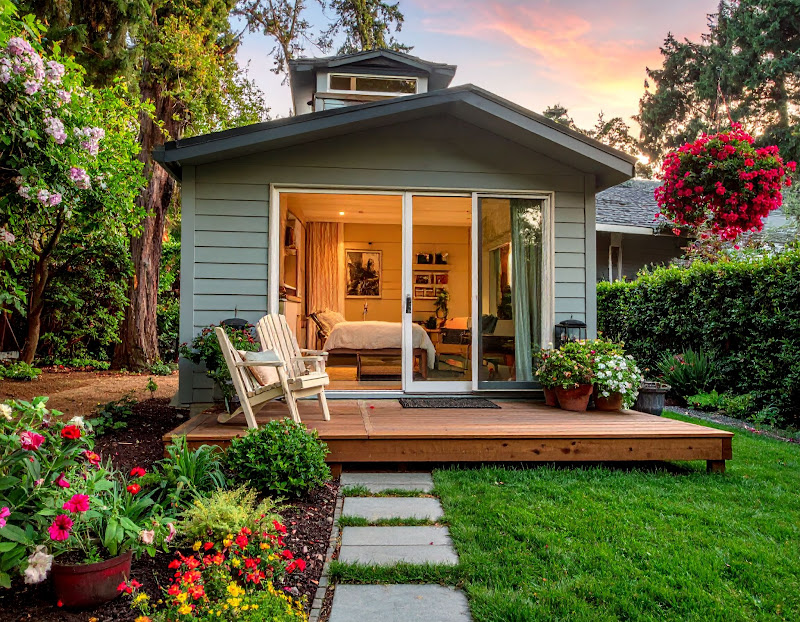
How do the regulations for ADUs differ between R-4, R-4A, and R5?
As mentioned before, any accessory dwelling unit you build in the City of Atlanta has to be 750 square feet or smaller, and no taller than 20 feet high. But there are other requirements that differ depending on your zoning.
If your property is zoned R-4 or R-4A, you can build an ADU with a 7 foot setback on the sides of your property and a 15 foot setback at the back (meaning the foundation of the ADU needs to be at least 15 feet from your back property line). For R-5 zoning, the setbacks are smaller, just four feet on the sides and at the back. If there’s an alley behind your property you can measure the back setbacks from the middle of the alley.
ADUs vs Guest Houses
As mentioned above, even if your zoning doesn’t clear you to build an ADU, you can still build what’s called a guest house. There are some differences between an ADU and a guest house, though. A guest house cannot have a stove. It can’t be used for long-term occupation, except in the case of ‘watchmen and servants’. Guest houses face different size restrictions than ADUs – they’re capped at 30 percent of the square footage of the main house, so if your original house is 2,000 square feet you can build a guest house of up to 600 square feet, but if the original structure is 3,000 square feet you can build a guest house up to 900 square feet. What you CAN do with a guest house is rent it out for less than 30 day stays on sites like AirBnB or VRBO, as long as you get a license. (This is also very much an option for ADUs as well.)
Interested in building an ADU or guest house in Atlanta? Send us a message and we can help you get started.
Ever since the City of Atlanta started allowing homeowners to build ADUs, or accessory dwelling units, on existing residential lots,...
Read more
If you’re reading this, chances are good you’re already considering building an ADU (aka accessory dwelling unit), or a carriage...
Read more



Comments